About Andrew Garnet
MSW, RSW · Registered Social Worker · 18 Years in Practice · Scarborough, Ontario
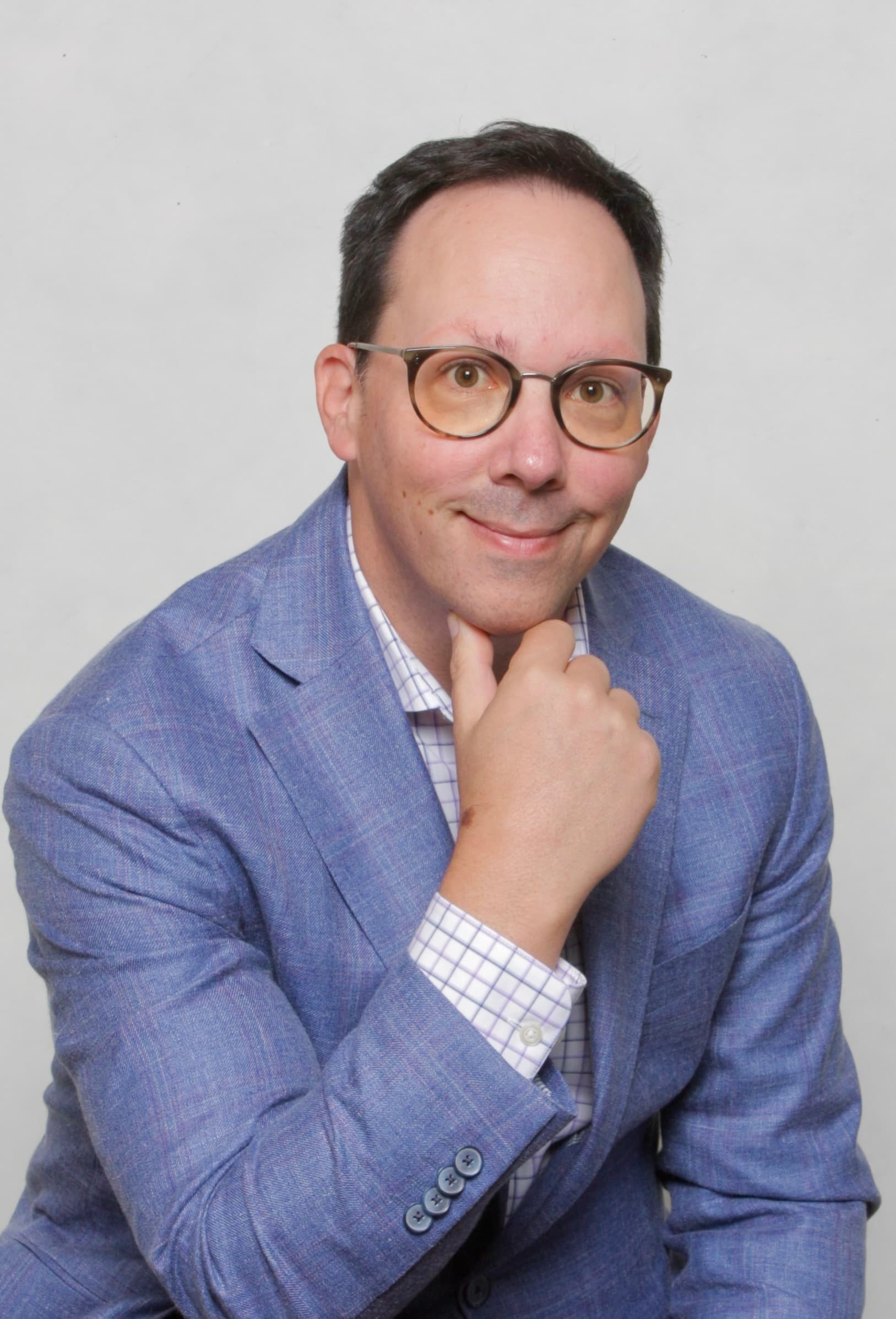
Something Brought You Here.
Maybe it's exhaustion — the kind that sleep doesn't fix. Maybe it's a relationship that used to feel safe and now feels like navigating a minefield. Maybe something happened that you've never told anyone about. Maybe you've spent so long holding everything together for everyone else that you genuinely can't remember the last time someone asked how you were doing — and actually waited for the answer.
Or maybe you just know, quietly, that something needs to change. And you've known for a while.
Whatever brought you here — I want you to know something: reaching out isn't weakness. It's one of the most courageous things a person can do. The fact that you're reading this tells me something important about you — that somewhere underneath everything you're carrying, you still believe things can be different.
I believe that too.
This Wasn't Just a Career Choice.
I didn't come to this work because it seemed interesting from the outside. I came to it because I've lived long enough to understand — from the inside — what it means to carry something heavy alone. And to know the difference between managing and actually healing.
Like a lot of people, I learned early that being strong meant not showing the weight. That there was a version of yourself you presented to the world, and then the version that existed when nobody was watching. I understood what it felt like to keep things compartmentalized: to function, to keep going, to be fine on the outside — while something underneath quietly pulled at the seams.
At some point, I came to understand what real support could look like. Not the kind that glosses over difficulty or tells you to look on the bright side. The kind that says: I see what you're carrying, I'm not afraid of it, and I'll stay in the room with you while we figure it out.
That experience changed what I believed was possible for people. And it has shaped every session I've sat in for the eighteen years since.
I don't sit across from people at their hardest moments as an outside observer. I sit there as someone who understands — not identically, but genuinely — what it costs to hold things alone. That understanding lives in the room with us. I think people feel it. I think it's part of why they keep coming back.
People Who Find Their Way Here
There is no typical client. But there is something they almost always have in common.
The Person Who Has Been Strong for Too Long
You've been the one everyone else leans on. You've handled every crisis, shown up for everyone else, and kept your own feelings in a drawer labelled “deal with later.” Later is here.
The Person Carrying Something Old
Something happened — years ago, or a lifetime ago — and you've been living around it ever since. You're tired of it touching everything. You're ready to put it somewhere it belongs.
The First Responder or Veteran
You've seen things most people can't imagine and you carry it without complaint because that's what the job demands. But the job doesn't have to follow you home forever.
The Man Who's Never Done This Before
You were raised to push through. Asking for help feels foreign. You're here anyway — maybe because someone you love asked, maybe because you're finally ready. Either way, you're in the right place.
The Couple at a Crossroads
Something between you has shifted. The same arguments circle back. The distance is growing and neither of you knows how to close it. You're not here because it's over — you're here because it matters.
The High-Achiever Who's Running on Empty
From the outside, everything looks fine. Good job, capable, together. Inside, you're exhausted in a way that doesn't match what people see. The gap between the two is widening. You want to close it.
What nearly everyone who walks through the door has in common is this: they've been carrying more than they needed to — and carrying it alone. That's what we change.
What I Believe About People — and About Therapy
Most of the people I work with aren't broken. They've adapted. The anxiety that won't let you rest used to keep you safe. The emotional walls that push people away once protected you from something real. The patterns that are problems today made sense at some point in your history.
Therapy isn't about fixing what's wrong with you. It's about understanding what happened to you — and building something new from there.
I also believe this: you don't have to be in crisis to deserve support. You don't need to hit rock bottom before it's “bad enough” to ask for help. If something is making your life smaller — if there's a version of yourself you can feel but can't quite reach — that is enough of a reason to be here.
And I believe that most people are more capable of change than they think they are. What they need is the right support, the right approach, and a space where they feel safe enough to actually do the work.
“You don't need to have the right words. You don't need to know what's wrong or be able to explain it. You just need to show up. We'll figure out the rest together.”
How I Work
There's no script. No one-size-fits-all method. Here's what you can count on.
Honest, Not Comfortable
I'll tell you what I actually think. I won't pad difficult truths or dance around what I'm observing. Therapy without honesty is just expensive conversation. I say the hard things — with care, but directly.
Collaborative Pacing
Pacing is discussed throughout treatment, particularly when difficult or traumatic material is involved. I monitor response, invite feedback, and adjust the plan while also explaining clinical considerations, risks, and alternatives.
Evidence-Informed and Individualized
I consider current evidence, professional guidance, client preferences, clinical context, and my scope of competence. Evidence and suitability vary across approaches, concerns, and individuals, so no particular outcome is promised.
Respectful and Non-Judgmental
I work to create a respectful environment where difficult experiences can be discussed without shame. Trust develops differently for each person, so questions, concerns, boundaries, and feedback are welcome throughout the work.
The Tools I Bring to Every Session
I hold a Master of Social Work (MSW) degree and am registered with the Ontario College of Social Workers and Social Service Workers (OCSWSSW) as an RSW. I am also a member of the Ontario Association of Social Workers (OASW) and the Canadian Association of Social Workers (CASW). My training includes multiple therapeutic approaches. Any approach used is selected collaboratively according to the presenting concerns, available evidence, client preferences, suitability, and my scope of competence.
EMDR — Eye Movement Desensitization & Reprocessing
A structured psychotherapy included in several clinical guidelines for PTSD. EMDR may not require a detailed verbal account of every aspect of an experience, but assessment, preparation, consent, monitoring, and some discussion remain necessary.
CBT — Cognitive Behavioural Therapy
Examines relationships among thoughts, emotions, behaviour, and context. Specific CBT interventions, evidence, suitability, and expected course vary by concern and individual.
ACT — Acceptance & Commitment Therapy
Helps you stop fighting your own inner experience — and start building a life aligned with what actually matters to you, even when difficulty is present.
DBT — Dialectical Behaviour Therapy
May include skills related to emotion regulation, distress tolerance, mindfulness, and interpersonal effectiveness. Full-model DBT and the selective use of DBT-informed skills are not the same service.
Sensorimotor Psychotherapy
This body-oriented approach attends to physical sensation, movement, arousal, thoughts, and emotions together. The phrase “trauma lives in the body” is a metaphor rather than a literal account of memory storage, and evidence and suitability vary.
EFT & Gottman Method — Couples Therapy
Emotionally Focused Therapy works with the attachment needs underneath conflict; the Gottman Method provides research-backed tools for de-escalating conflict and rebuilding trust and friendship.
SFBT · MBSR · MBCT · IPT
Solution-Focused Brief Therapy for goal-oriented change; Mindfulness-Based approaches for present-moment awareness and relapse prevention; Interpersonal Therapy for relationship patterns.